.avif)
MUONIONALUSTA METEORITE
FAMILY TREASURE
We present Muonionalusta – one of the oldest meteorites on Earth. As its direct discoverers, we offer you access to a fragment of the universe whose origin far exceeds anything terrestrial.
%20(900%20x%20800%20px).avif)
Muonionalusta
IRON METEORITE

SIDERITE

SideritE
Muonionalusta is a natural alloy of iron and nickel formed in the core of an ancient protoplanet. It occurs on Earth only in limited quantities, making it one of the rarest materials known to humanity.

OCTAHEDRITE (IVA)
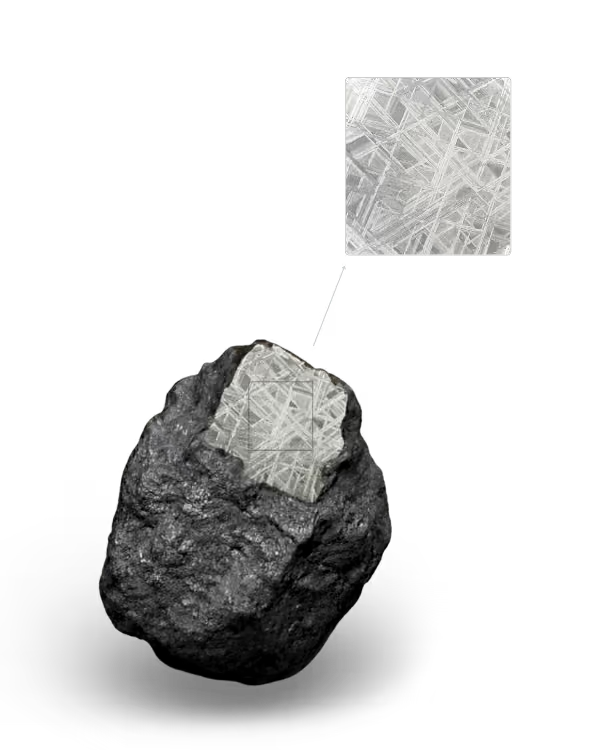
A unique structure defined by Widmanstätten patterns. It formed through cooling at a rate of one degree per million years, a process completely impossible to replicate under terrestrial conditions.
4.565 BILLION YEARS
A tangible record of the beginning of time, older than Earth itself. This Muonionalusta mmeteorite formed shortly after the birth of the Sun as one of the first solid bodies in our Solar System.
COSMIC SIGNATURE
Specific concentrations of gallium and germanium provide unmistakable evidence of extraterrestrial origin. This chemical signature serves as a definitive certificate of authenticity.
Muonionalusta meteoritE
ONE MILLION YEARS
IN THE ARCTIC GRIP
Tento vesmírný posel dopadl do arktické tundry před milionem let. Pod neprodyšným krunýřem ledu překonal čtyři doby ledové, které jej jako přímého svědka pravěku, dokonale uchovaly až do dnešních dnů.
ARCTIC IMPACT
One million years ago, its journey ended in the northern wilderness. Ice sheets sealed it off for thousands of years, protecting it from external influences.
ANCESTRAL LEGACY
Local inhabitants have been finding meteorites for generations. They used them to craft various objects, unaware of their true extraterrestrial origin.
FIRST DISCOVERY (1906)
The first find near the Muonio River in 1906 confirmed the material’s extraterrestrial origin. The meteorite is named after the local Swedish geography.

ICE PRESERVATION
Glacial movement dispersed fragments of the meteorite across the polar landscape. Thanks to freeze preservation, they survived four ice ages in an exceptionally pristine state.
COSMIC STRUCTURE
Widmanstätten pattern — cosmic signature
Formed by extremely slow cooling of the iron-nickel core of an ancient protoplanet, at a rate of approximately one degree per million years.
Material older than Earth itself.
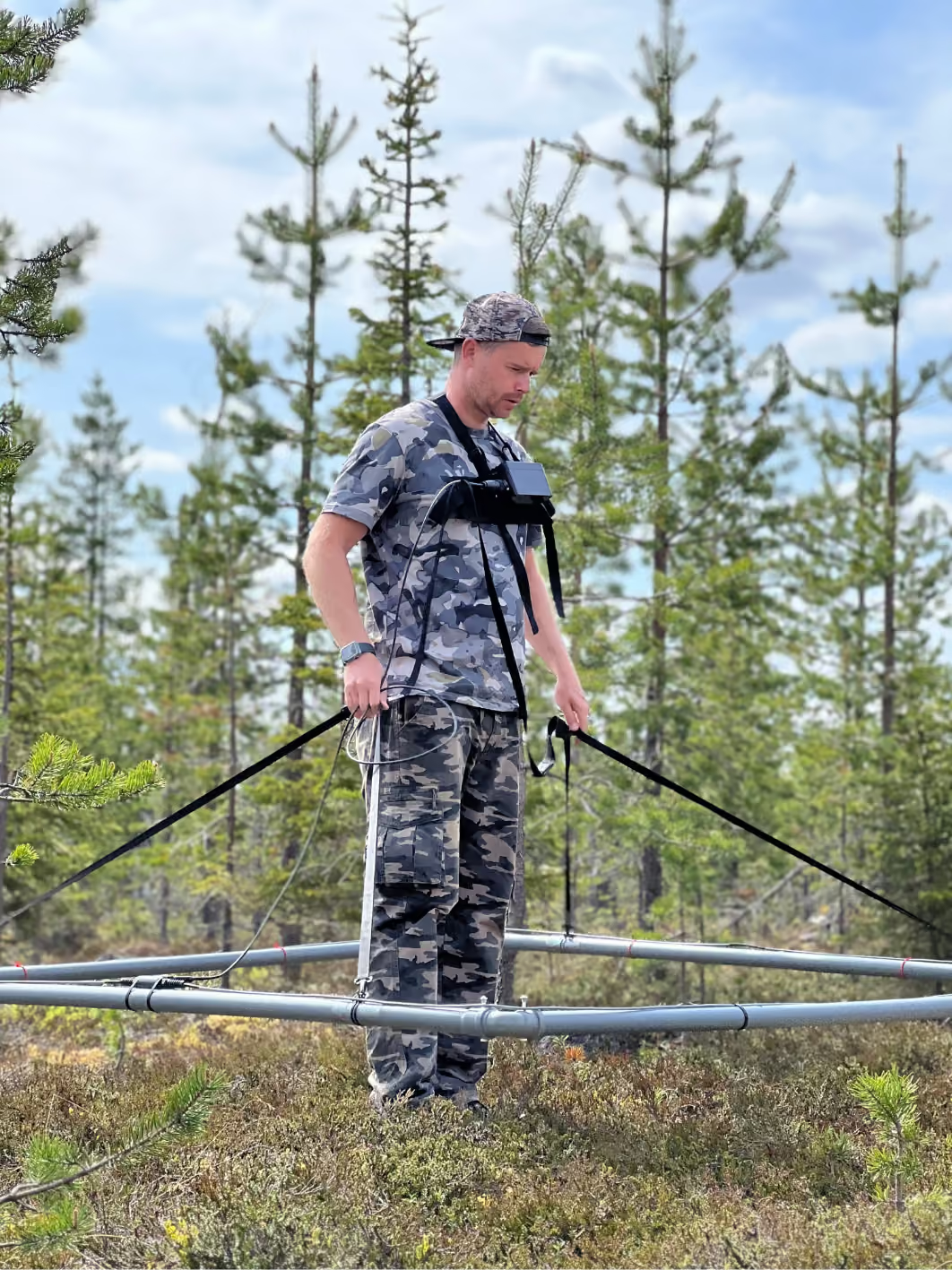
We've been hunting meteorites
for Over twenty Years
We are a family team of meteorite hunters with more than twenty years of experience in Arctic regions.
nové nálezy jsou dnes extrémně vzácné.
ETHICAL APPROACH
Maximum respect for every find.
SUSTAINABLE RECOVERY
We return the site to its original condition.
PURE VALUE
The provenance of every piece is traceable.
A DISCOVERY REWRITING HISTORY
THE STORY OF ONE OF THE GREATEST FINDS
950 kg
one of the largest discovered fragments, found by our family

WORLD UNIQUE SPECIMEN
Discovered by the founder of our tradition, Jiří Šimek.
CZECH FOOTPRINT
It is part of the exhibition at Petřín Observatory.
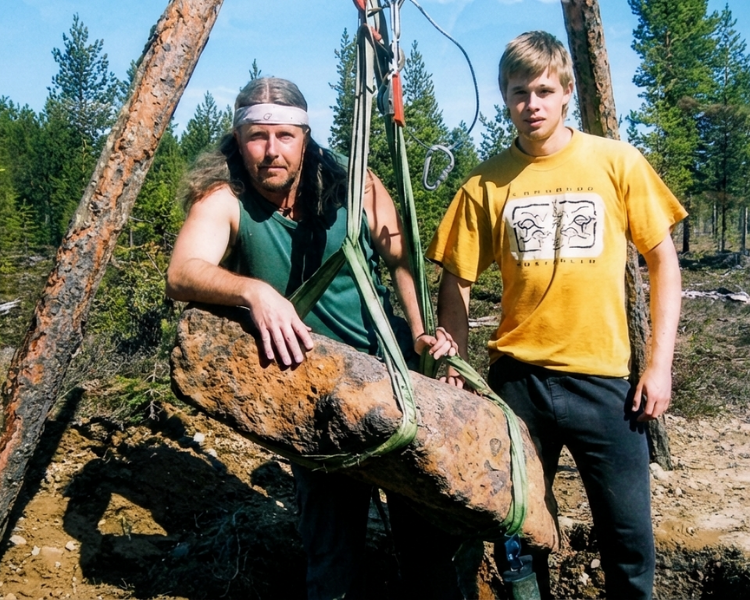
Jiří Šimek with his son David during the extraction of a 950 kg
Muonionalusta meteorite from the Arctic tundra.
Muonionalusta meteorite from the Arctic tundra.